
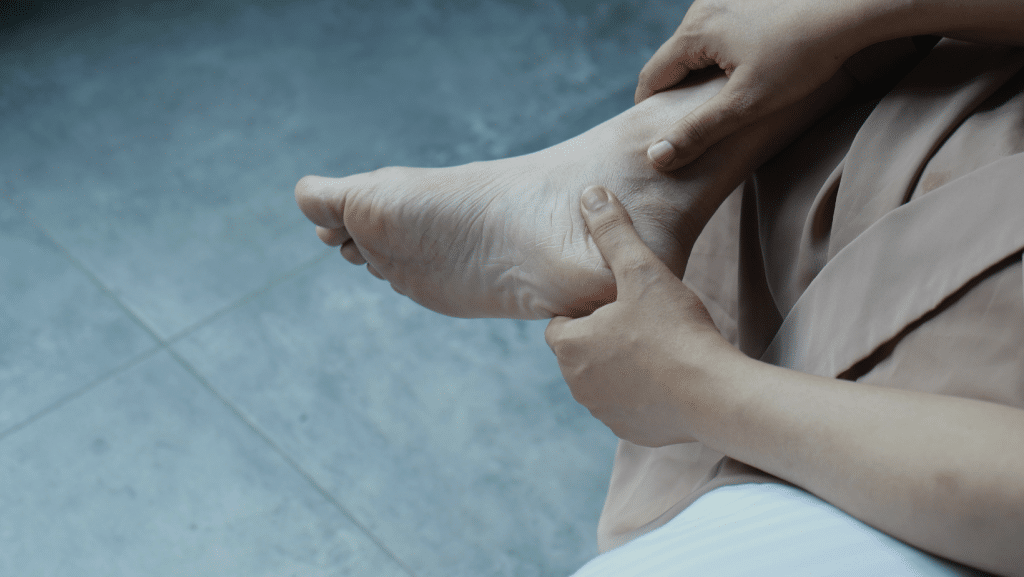
If you get a small cut or blister on your foot, it usually hurts enough to grab your attention. You clean it, bandage it, and before long, it heals. But for the 38.4 million Americans living with diabetes, the story can be very different.
High blood sugar and poor circulation can make even a small foot injury turn into a serious health issue. Understanding how diabetes affects your feet—and how to protect them—can help prevent complications.
What Is a Diabetes-Related Foot Ulcer?
A diabetes-related foot ulcer is an open sore or wound that doesn’t heal properly. These ulcers most often appear on the bottom of the foot but can occur anywhere the skin breaks down.
If you’ve had one before, you’re more likely to get another. That’s because diabetes can reduce blood flow and cause nerve damage (neuropathy), which may make your feet feel numb. Without normal sensation, cuts, blisters, or sores can go unnoticed and untreated, allowing them to worsen over time.
Why Are Foot Ulcers So Dangerous?
Diabetic foot ulcers can be serious and, if untreated, even life-threatening. Healing is often slow—it may take weeks or even months. Some ulcers may require surgery to remove dead tissue.
If infection spreads to the bone or surrounding tissue, amputation may become necessary to protect overall health. This is why early detection and specialized wound care are essential for people living with diabetes.
What To Do If You Develop a Foot Ulcer
Never ignore a wound on your foot—even a small one. What looks like a simple blister or callus can quickly become a non-healing wound that needs medical attention.
At Bunkie General Hospital’s Wound Care Clinic, our specialists provide comprehensive care for diabetic wounds. After a full evaluation (which may include diagnostic testing), our team creates a personalized treatment plan that may include:
Specialized dressings to protect and promote healing
Offloading devices to reduce pressure on the wound
Advanced wound therapies to speed recovery
Protect Your Feet—Protect Your Health
Good foot care starts with daily attention. Check your feet for cuts, redness, or swelling, and wear shoes that fit well. If you notice a wound that isn’t healing, seek help right away.
The Wound Care Clinic at Bunkie General Hospital is here to help manage and treat diabetes-related wounds safely and effectively.
For more information or to schedule an appointment, contact us today!

Contact Information
This article is for informational purposes only and is not a substitute for professional medical advice, diagnosis, or treatment. Always consult your healthcare provider with any questions or concerns about your health.